Elements every professional services website needs
Your website is one of the strongest lead generation tools your business will ever have.
Despite this fact, many businesses will find themselves allowing their website to fall by the wayside in favour of other priorities. This is one of the worst things that you can do in the long term if you value the growth of your business.
At the end of the day, no website—or, even worse, a bad website—could cost you countless customers over time.
But where should you start?
While the optimal website will require ongoing support, updating and constant optimisation, there are core elements that a business can begin with and rest assured that they have their bases covered.
Here are 7 core elements that all good websites should have.
Home Page
Oftentimes, your homepage will be the very first opportunity that you have to make an impression on your potential client. This is a golden opportunity, and you do not want to waste it.
Now, there are many shapes and forms that a home page can take—from more design-heavy, interactive work to a straightforward, no-nonsense landing page—but no matter which route you choose, your home page should make it clear from the get-go what exactly it is that you do.

It’s easy to get lost in the jargon when it comes to your home page, trying to make it appeal to as many people as possible (and assuming that your viewers know as much about your business as you do!), but work hard not to fall into this trap.
Don’t make them search and wonder what exactly it is you can do for them. Tell them.
To do this, your home page should include:
- A clear mission statement that is visible as viewers first land. It should tell them exactly what you do and what you stand for from the moment they first arrive on the page.
- Testimonials for social proof. This is your opportunity to show that other people endorse your business.
- Key client showcase. Display any particularly notable names that you have worked with, further providing visitors with social proof.
- Key links. Your home page should encourage navigation throughout the rest of your site.
- A CTA. Whether this be to book a demo, get in contact, or fill out a form, your CTA should link to the most important action that you want to drive.
Services
Similar to the home page, if prospective customers have to dig to find your services or, even worse, are still scratching their heads after they have, then you are missing the mark when it comes to your website.
Your list of services should always be easy to understand, and even easier to find.
Ideally, an overview of your services will be found on your homepage, with an elaboration on them that can be found on a secondary page.
Even better is if each service then has its own dedicated page where even more information can be found—this both makes for a better user experience (which should always be your goal when approaching your site) whilst also benefiting your website’s SEO.
These individual service pages should then include details of what the service entails, what problems it solves, any pertinent FAQs, examples of industries/types of customers you work with, so people can understand if they’ve found a good fit and a key CTA to encourage engagement (whether that be a call, a demo or downloading a PDF).
About Us Page
Potential customers want to know who they’re buying from, and potential team members want to know who it is they could be working for.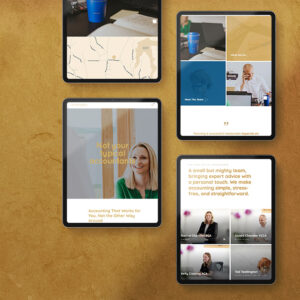
An About Us page is a great way to showcase the expertise and personality of your team. Whether you’re a one-man consultancy or a team of 50+, your About Us page gives your clients an idea of who is serving them and why they should trust your brand above others.
Your About Us page should be created with an eye towards showcasing these aspects. Everything from the headshots you choose (will they be traditional, grey-suit photos, or silly, personality-forward ones?) to the level of information you decide to share (are you going to list individual names and accomplishments or just a team photo?) will tell your potential customers a story about who you are and why they should work with you.
The most important thing here is to communicate why you’re the best people for the job. In an increasingly digital and AI world, it is key here to emphasise the real people and expertise behind your company.
No matter what, it’s important to showcase the whole team, not just management; this helps communicate that you are a people-first company that values talented employees. The benefits of this are twofold: showing potential clients that you are willing to endorse the expertise of your team, and showing potential hires that you are a great place to work with low turnover.
In fact, your About Us page can further be utilised to nurture your recruitment on an ongoing basis; it can illustrate your office location(s), what your company culture is like, any benefits your team may have, as well as any testimonials from your staff.
Contact Information
While it may seem obvious, many companies will neglect to clearly signpost their contact information.
This is vital information and should be clear and emphasised on your site.
The question that you should ask yourself above all else as you create your website should always be, “How can I make this as simple as possible for my potential customers?”
If a potential buyer has to click through multiple pages, use the search bar or fill out a form just to get into contact with your team, you are running the risk of losing them with each additional action they must take.
Your contact information should always be clear and emphasised on the page—the footer is a great place for this, in addition to (not instead of!) a contact page.
Ensuring that you have a contact page is also especially handy, as it acts as a landing page for Calls to Action (CTAs) throughout your site.
A good contact page should include a phone number, email address, contact form and business address.
Remember, it’s always about ensuring that the process is as simple as possible for any prospective or current clients trying to get in touch with you.
Frequently Asked Questions (FAQ)
Every step of your digital footprint should be about making the process for potential and active customers as simple as possible. If a basic question like “Does your business offer X?” requires them to fill out a form and wait for your reply, each action they had to take to get to that point is another opportunity for you to lose their business (and your competition to gain it!)
Make a note of questions you’ve frequently been asked by customers, common misunderstandings about what you do, as well as any questions that competitors have answered on their FAQ site, and have a dedicated section on your site where you answer these questions.
This section can be spread across multiple pages (with questions relevant to a particular service limited to the service page in question) or on a centralised “FAQ” page if you only have a few questions that apply to your whole business.
No matter how you decide to do it, answering common questions before customers even have to ask makes their journey easier, and puts you ahead of any and all of your competitors who haven’t taken the time to do the same.
Blog
A blog where you post regular content offers massive SEO benefits whilst simultaneously establishing you as a trustworthy thought leader in your industry.
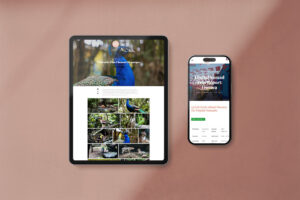 If done well, your blog can prove to potential customers that you are up for the job, act as a landing page towards which you direct traffic from other channels like social media, and tell search algorithms that you’re an expert in your field.
It can even lead a potential customer to you if your blog is the one that appears when they search for the answer about a current problem of theirs.
For this to happen, optimised blog content is key, as is regular posting; there is no point in creating a blog page if you are only planning on posting a handful of times and then neglecting it.
A well-maintained, well-researched blog, however, can make all the difference for your traffic in the long term.
Ideally, this will include clear categorisation, author biographies, a newsletter sign-up option and a variety of content types (thought leadership pieces, listicles, announcements, etc.)
GDPR & Industry Guidelines Compliance
Websites, when done properly, have a whole host of legal and compliance requirements that must be accounted for. These are not optional for anyone creating an official business site.
General Data Protection Regulation (GDPR) rules are the bare minimum, but many businesses rightfully choose to take further security measures into account.
Particular compliance requirements may vary by industry, and it is always worth bringing in expert help to help assist with building your site if you are in a highly regulated industry.
Bonus: Optimised for SEO, Performance and Responsiveness
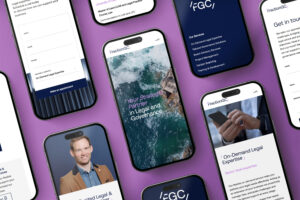 While it is not required for any website, optimisation for SEO, performance and responsiveness never go amiss when creating a website.
In addition to making your business more findable, they create a better experience for your customers, which should always be your ultimate goal when creating any business material.
Performance and responsivity, in particular, have great SEO benefits and make the user’s time on your site more straightforward and enjoyable. This alone makes it well worth the investment.
Remember, SEO isn’t just keyword stuffing—it’s a complex, constantly changing method that can significantly alter the success of your business online.
Bonus: Social Proof
Social proof in the form of testimonials is widely regarded as an incredibly powerful tool in your marketing toolkit. Showcasing your previous work, and the good things that former clients have to say about you, is never a bad thing.
Whether this take the form of case studies or direct testimonials across your site (or both!) it’s a great opportunity to show your level of expertise and dedication to client satisfaction.
Final Thoughts
Whether it’s a completely new build, some small tweaks, or a complete overhaul to an existing website, these factors should be the first port of call when building out an initial framework.
Investing in a well-designed, considered website is one of the first things that any new business should do to establish its foothold in the digital world, but that level of priority shouldn’t shift away as time goes on. Algorithms, user habits and businesses are constantly changing, and the websites made to represent these companies should stay up-to-date with those various shifts.
Your website truly can make a massive difference for not only your incoming flow of clients, but your client conversion and your client retention. It should always be treated as the powerful tool that it is.
At the end of the day, if you want to build an optimised, conversion-focused website, it will always be best to get the help of an expert team who can help make sure that all of these boxes are ticked.